

Singapore’s Digital Urban Climate Twin
Simulating urban heat in real time
Status
City description
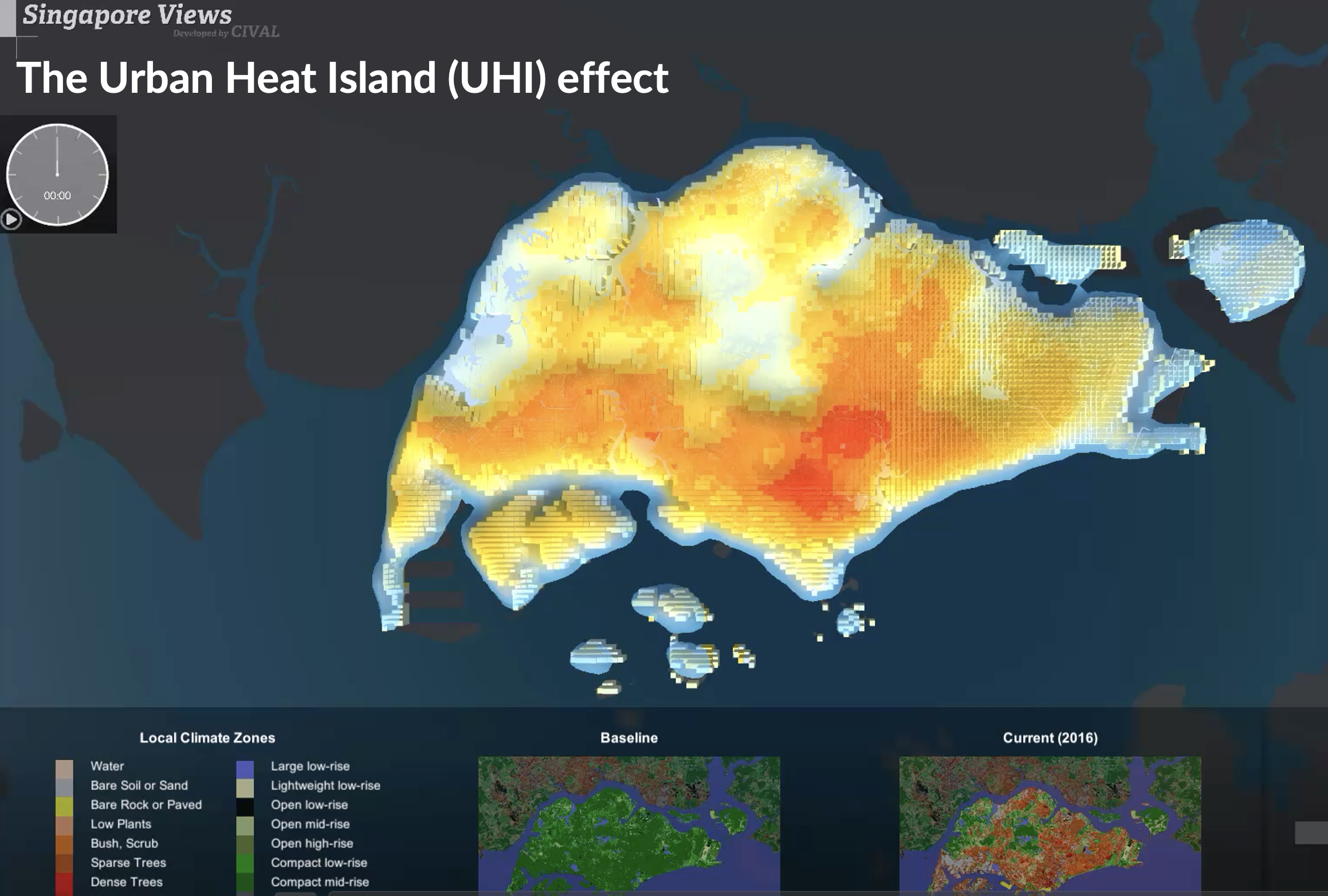
Singapore is a highly urbanised tropical city-state (5.6 million people approx.) with limited land, high density, and a tropical humid climate. It faces significant Urban Heat Island (UHI) effects (urban areas being several degrees warmer than rural surroundings) and climate change pressures. To maintain liveability, managing heat stress, energy for cooling, thermal comfort, and resilience is a critical priority.
Challenge
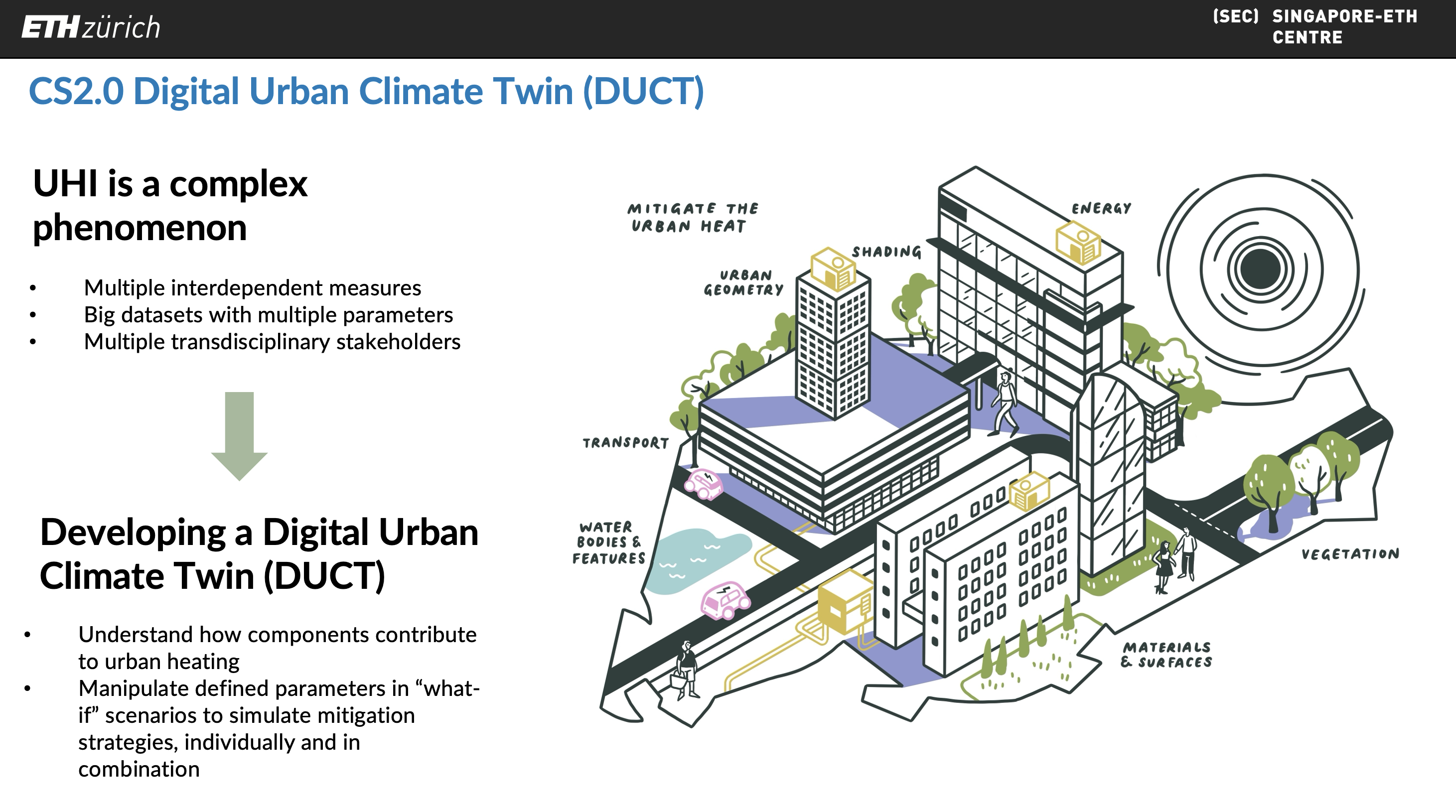
The Urban Heat Island effect in Singapore is a complex phenomenon, caused by multiple interdependent measures, big datasets, and the interaction of transdisciplinary stakeholders. Planners need a way to understand and quantify how different policies and design choices contribute to urban heating.
Solution
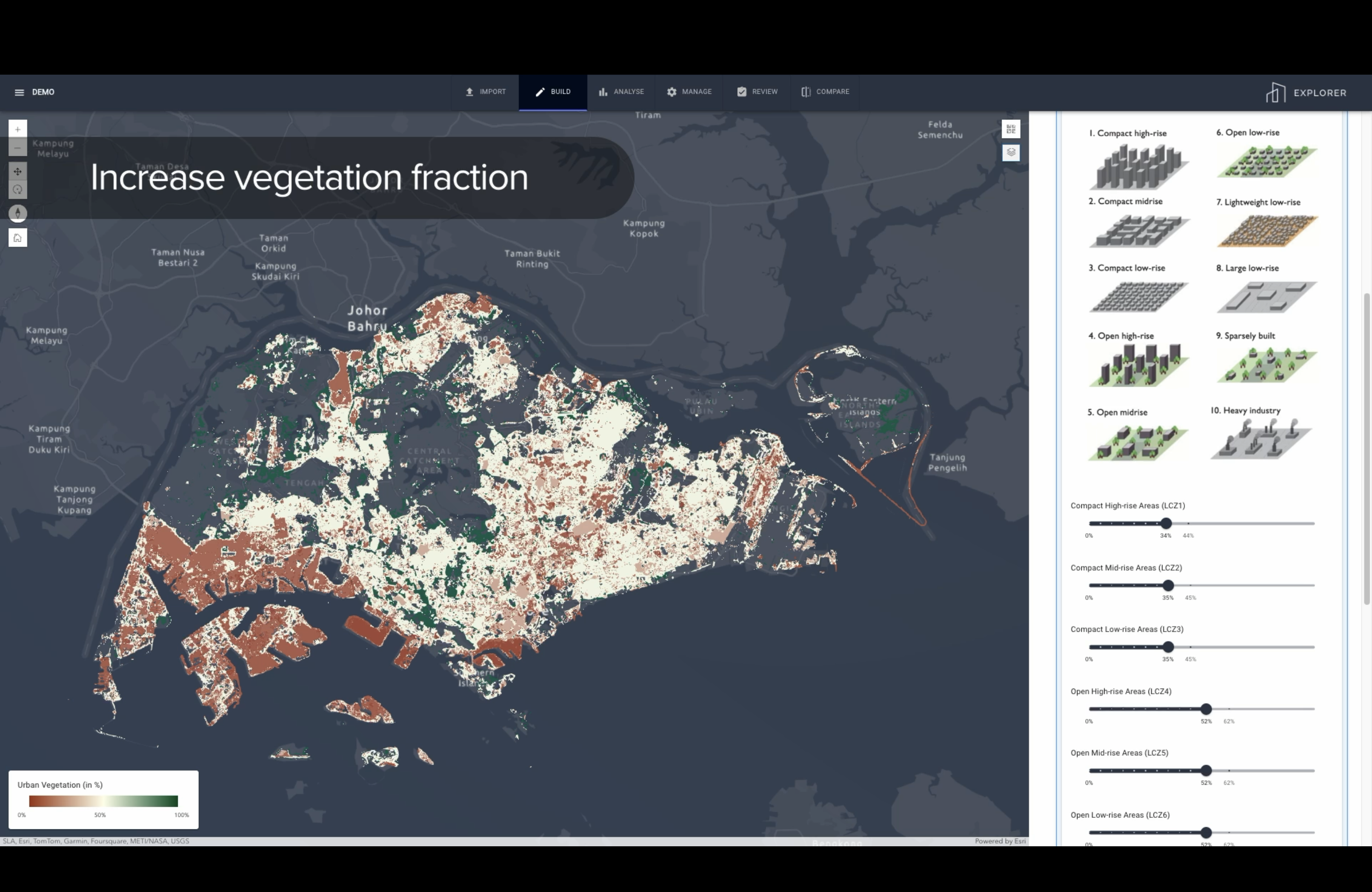
The Digital Urban Climate Twin was developed to integrate computational models that simulate climate, anthropogenic heat, and energy systems. Through the DUCT Explorer, a browser-based tool, planners can run what-if scenarios without needing scientific modelling expertise, making advanced simulations directly usable in planning.
Key Impacts
Up to 7 °C UHI intensity
identified in Singapore’s hottest districts
0.13 °C island-wide cooling achievable
through combined mitigation measures
8% reduction in cooling energy demand
in district-level optimisation scenarios.
22% reduction in anthropogenic heat emissions
using optimised district cooling systems
Effectiveness of cooling strategies varies significantly
by district; no one-size-fits-all solution
12–15% increase in future cooling demand
projected by 2050 without adaptation
90% reduction in modelling time
thanks to the automated DUCT Explorer interface
Comments ()