


Seoul Energy Information Integration System
Smart energy management for a carbon neutral Seoul
Status
City description
Seoul is a global megacity of around 10 million inhabitants, located in South Korea. As one of the most digitally advanced cities in the world, it has positioned itself at the forefront of smart city innovation. Seoul is also one of the most ambitious in climate policy, having pledged carbon neutrality by 2050 and a 40% reduction in greenhouse gas emissions by 2030 compared to 2005 levels. These goals are reflected in city planning, infrastructure, and citizen engagement strategies.
Challenge
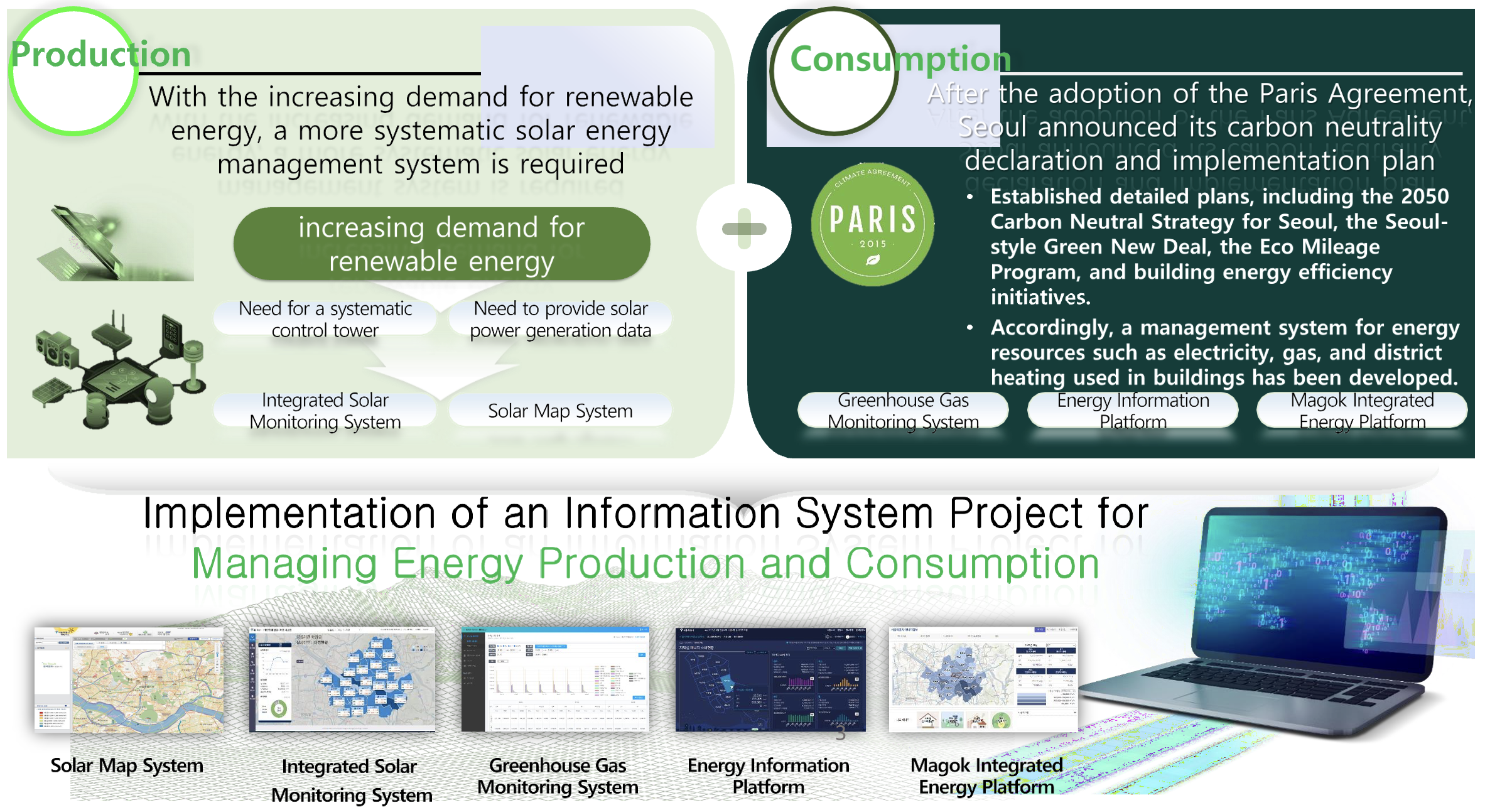
Seoul faced growing energy demand from its dense urban population and heavy reliance on fossil fuels. Energy systems were fragmented across sectors, making it difficult to monitor emissions, optimize renewables, or inform policy decisions.
Solution
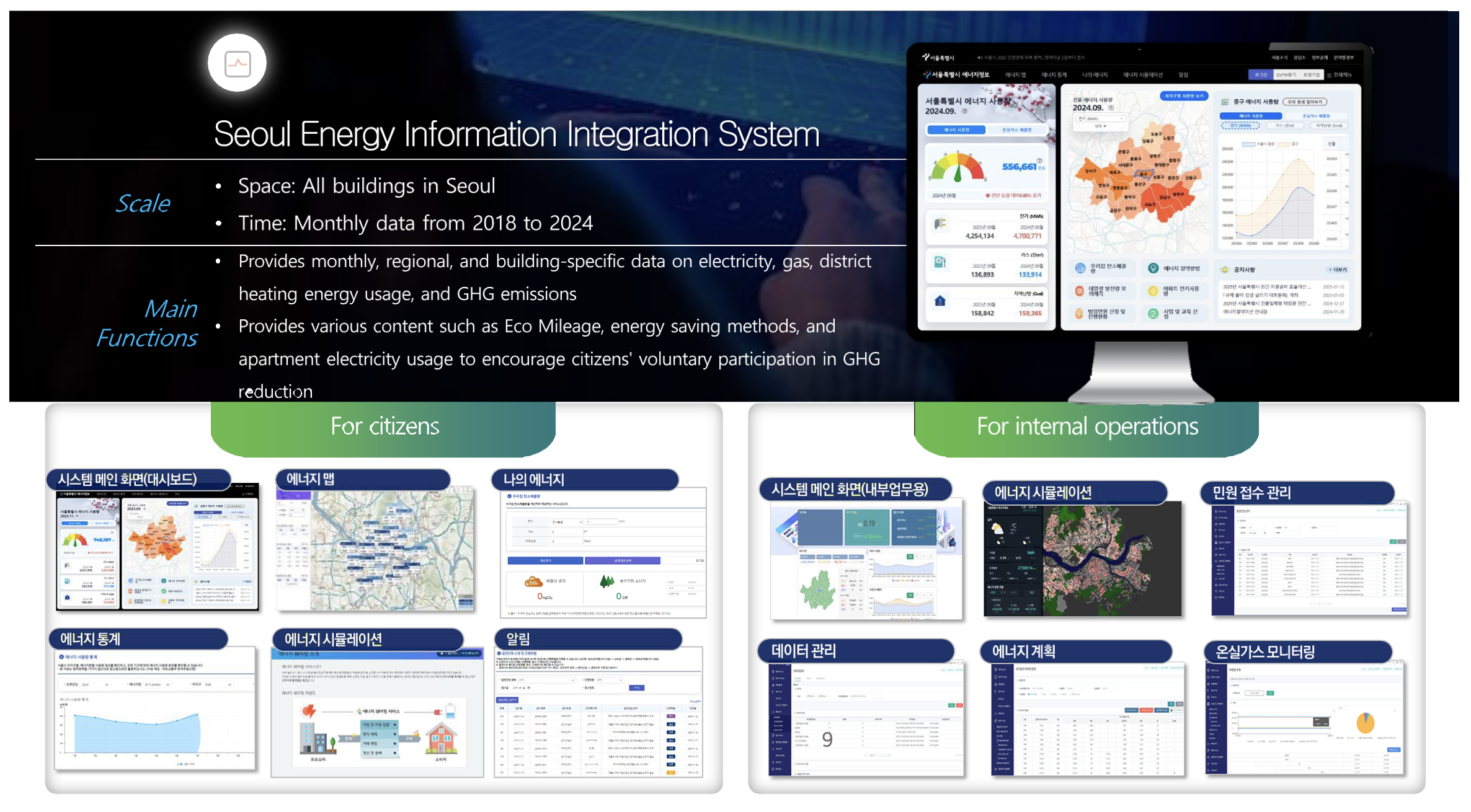
The Seoul Energy Integration System consolidates real-time data from diverse energy sources into a single platform. This enables better planning, smarter investment, efficient operation of renewables, and greater transparency for citizens.
Key Impacts
30% increase in monitoring efficiency
across public and private energy systems.
100,000+ solar panels tracked
through the platform, ensuring optimal production.
3.5 million households benefit
from improved efficiency and access to information
40% by 2030 reduction target
embedded in policies supported by the system
Thousands of city staff and utility professionals
use integrated data daily for planning.
100 city facilities connected
to full public solar monitoring by 2025, as geothermal monitoring systems for 2026
Comments ()